
Dependent Rational Animals
New-Year's reflections on the inevitability of inconveniencing each other

I've been on a “screen break” the last couple weeks, which means that in addition to not having a smartphone, I have instructed my husband to hide my laptop. We're back with my family for the holidays, so I check my email and substack notifications a few times a day on the family desktop.
In the meantime, I've been bored. Here are the books I've read since this whole business began:
The Memory Police - Yōko Ogawa
One Corpse Too Many - Ellis Peters
After Virtue - Alasdair Macintyre (about halfway through) (this is my second time reading it)
Wuthering Heights - Emily Bronte (about halfway through)
The Good Life Method - Meghan Sullivan and Paul Blaschko
Against the Machine - Paul Kingsnorth
Rational Dependent Animals - Alasdair MacIntyre
I've also made the first serious progress in some time on my afghan, which is this ridiculous elaborate Celtic braided pattern I bought off Etsy, all made with uber-soft baby yarn. For those of you who know anything about crochet, this is a bad idea. As I explained to someone who asked about it recently, it's supposed to be a baby blanket, but it’s vaguely hideous, and anyway but the blanket is just starting out and the baby has a considerable head-start, so there's no way to know if I'll finish in time.
Speaking of which, I'm now thirty-five weeks pregnant, which is just about the time when pregnancy begins to be seriously disabling. I take daily naps at the same time my toddler does. I can't stand or walk for any considerable amount of time. When I go to daily mass it wipes me out for the rest of the morning, even though I am typically sitting the whole time because kneeling is not practical for my center of gravity. Sitting down in any position whatsoever is uncomfortable; my daughter sits high, most of her little body tucked beneath my ribcage.
All of this made reading Macintyre's "Dependent Rational Animals" a very special experience. I can't remember for the life of me why I ordered it in the first place; I only rarely buy books, even for academic research. But either way, it's a new favorite. MacIntyre, famous for his beautifully cynical thesis in After Virtue, wrote a handful of books between After Virtue and Dependent Rational Animals, the latter of which is solidly after his turn to Thomism. The thesis of Dependent Rational Animals is quite simple: so far as we are unique from other animals, we have access to a range of interesting and complex virtues which have to do with exercising our birthright as independent rational agents. On the other hand, so far as our natures are in common with other animals—and this commonality is considerable!—we are every bit as reliant on our families, communities, and larger ecosystems as, say, dolphins. To be precise, we are dependent because we are animals, but we are not only dependent on others for the kinds of flourishing which are common to other animals: on the contrary, all of our uniquely human activities—participation in philosophical and religious and political and ethical spheres, for instance—are possible only in light of the support we receive from our community. Gabriel Marcel pointed out that one's very existence as a living adult human being is evidence that someone took care of you when you were an infant. MacIntyre makes the same point, but about the life of fully-realized independent rational activity. If someone reads philosophy books and writes poetry and makes paintings and thinks carefully about how their decisions will impact other persons, if they are active and energetic in the life of their family and their political community, this speaks to successful dependence just as much as to successful independence. It is evidence that someone took care of them as an infant, and that since that time they have been helped in all sorts of complex ways, that they are the beneficiaries of the radically uncalculated love and gift-giving that lies at the root of successful moral and intellectual formation. This includes things like formal education. But it also—and, for MacIntyre, more importantly—includes being cared for in those times when we are rendered temporarily or permanently disabled.
I found this book absolutely wonderful, partially because it gave me precise terms in which to frame my own experience. I have been personally enabled to engage in philosophy and history and literature, to contribute in my small way to professional research, to take on the joyful duty of teaching undergraduates, and even to write plays and short stories and crochet over-complicated blankets—all of this has been possible for me because I am the recipient of a simply enormous amount of uncalculated gift-giving and love. Of course this is true to some extent of everyone, especially those privileged enough to be able to dedicate themselves to the intellectual life. But the interplay of dependence and rationality is particularly obvious in my own case, and especially in this season of nesting, pregnancy, and childbirth.
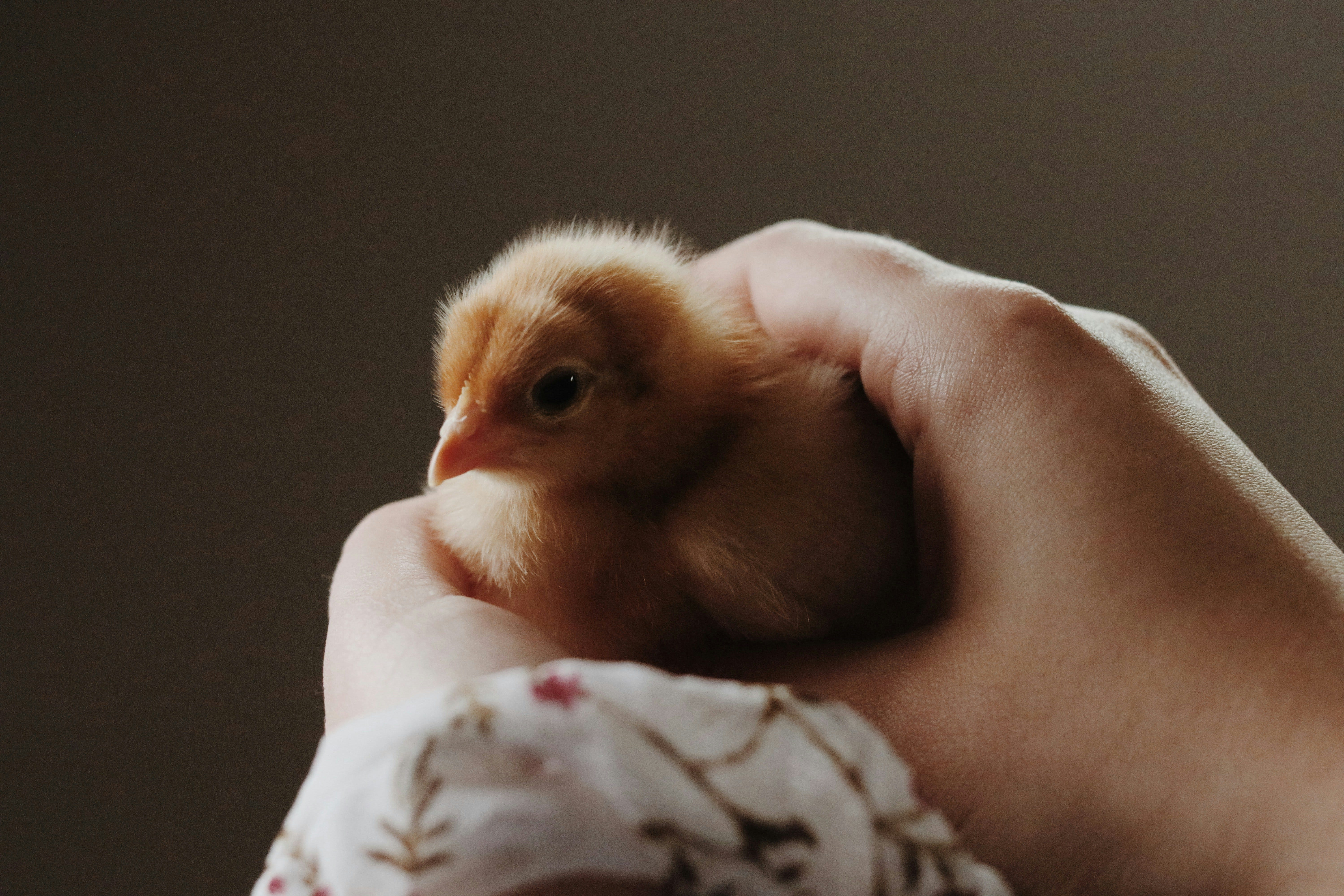
This dependence is first of all on my husband. When I say I depend on my husband, I do not mean that I apprehend his "spiritual headship over our family" in some abstract way (though I do), nor that he contributes financially (though he does). What I mean is that he gets up before me to change our one-year-old's diaper and get him dressed for the day, tasks which are increasingly difficult for me as my core strength erodes. I mean that he goes up and down the stairs for me, that he gets out of bed to turn off the lamp on my side of the room, and that he physically helps me out of bed in the morning. He packs our suitcases when we travel, and wrangles the toddler in the airport. He also gives me the precious gift of time, which I see so often denied to other mothers. I have time to write, time to teach, time to read, and time to rest. This is no small sacrifice for him: he is in a PhD program of his own, which is by no means a 9-to-5 job, especially the way that he does it. In busy times, he is often up late into the evening writing or researching. I wonder sometimes if he'd be much more efficient if his life wasn't organized around caring for his family, around the “husbandry” that Fiona Melton recently wrote about. But when I mention this, he laughs, and tells me that he's doing all this for us anyway, and he would have lost heart a long time ago without these precious burdens of love. “Pondus meum amor meus,” he tells me often.
The atmosphere of security generated by this sort of radical, providential love has borne surprising and beautiful fruit in my life. I had a very difficult birth with my first, and was literally in bed for two weeks. Members of my family and my husband's took turns staying with us, preparing food, washing pump parts, buying us the little things we needed. The first week I could not get up on my own at all: when I needed to shower or use the bathroom, my husband carried me like a child. But strangely enough, in this surreal state of total dependency, my intellectual life bloomed. Slowly but surely I continued to write my term papers, study for my exams, and communicate with my professors about the classes I was missing. Many of them came to my house and visited me, bringing hot meals and providing (at my request) the key points of their lectures from that week.
It came as something of a surprise to my own extended family that, when we came to stay with them that summer with our newborn in tow, I had made up my mind that I was going to pursue a PhD, something which I had been ambivalent about in the past. But something had changed in me in that time. I had lived for a long while, I realized, with the fear that if things got really tough, I would lose either the ability or the desire to do the things I loved. Well, it had gotten really tough, and the flame was still alive—not because I possessed any unusual mental or physical fortitude (I had long been disillusioned of that)—but because I was at the center of a community of care that many people could only dream of. The immensity of this privilege had never been clear to me before; now that it was, I felt that it imparted a certain responsibility.
Part of MacIntyre's point is that since being dependent (and being one nasty flu or back injury away from being radically so) is part of our nature, moral philosophy is not something we can do very well if we try to ignore it. It is probably always a little risky to abstract from our embodied nature to do science or philosophy, but in some cases it is necessary. But for the sort of philosophy which engages with questions like "what do human beings, as human beings, need in order to be happy?", it poses a real intellectual danger to separate the world into blissfully unattached, perpetually healthy philosophers, who do this thinking about the good life, and then on the other hand old people and sick people and little children and pregnant women who constantly need to pee. This inclines us to ask stupid questions, like whether and how we should expect to get any happier by entangling our lives with such inconvenient creatures. This ridiculous philosophical fantasy dissolves only when we take note, with reverence and gratefulness, of the fact that we are inconvenient, that any intellectual success or privilege we possess is a direct result of the fact that we were taken care of when we were little and sick and difficult, and that we continue to be taken care of even now.
So that is where a real account of human flourishing starts: with the acknowledgement that we are the sort of creatures that, at various points in life, need our diapers changed. And in fact it is not so bad to be naturally dependent, perpetually preserved from serious peril only by the unreasoned lovingkindness of other persons. Furthermore I have found it is a source of joy to be depended on: by my little child who needs help blowing his nose, who, when he comes down with a slight cold, suddenly loses all pretention to independence and insists on being held against my skin day and night like a newborn; by my husband, who needs me to schedule barber appointments and remind him to go to bed when he's up too late doing theological research; by my students, who want to know if I can read their paper draft in the next four hours; but most of all by my unborn child, who needs absolutely everything from me, but whose needs are still, absolutely considered, very small, because she is small as well. Pondus meum amor meus.
What a moving reflection on MacIntyre's core argument that our very capacity for rationality is built on webs of care and dependence. The contrast you draw between your postpartum vulnerability and your intellectual flourishing is really powerful, like it cuts through the fantasy that serious thought requires total autonomy. I've seen this tension play out alot in academic circles where folks treat embodied needs as distractions from the 'real' work, when actually receiving care is what makes any of the work posible at all.
I just discovered Dependent Rational Animals a couple weeks ago, so this post is a lovely coincidence!